
What is renewable natural gas?
Ryan Clancy | April 27, 2022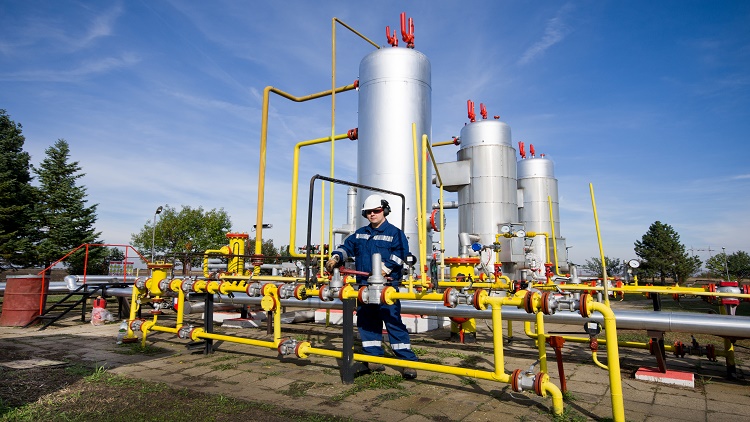 Existing natural gas infrastructure can be used to transport renewable natural gas. Source: Budimir Jevtic/Adobe Stock
Renewable natural gas (RNG), also referred to as biomethane, is an innovative technology that creates a bridge between traditional fossil fuels and renewables. It is produced from the decomposition of organic waste sourced from landfills, wastewater treatment plants, agriculture and forestry under anaerobic (oxygen-free) conditions. The gas is then purified to remove any carbon dioxide, hydrogen sulfide and water.
It is a renewable source of energy as it is produced from waste that is generated on an ongoing basis. Methane is naturally produced from this waste and is captured by RNG production before it escapes into the atmosphere.
What are the biggest sources of RNG?
Landfills are responsible for over 90% of the RNG that is produced and are known to be one of the most efficient sources of this fuel. This is because many landfill sites already have collection mechanisms in place for methane, and generally produce more methane in a smaller area.
Sources like food waste and animal manure are less concentrated but have seen recent growth in the production of renewable natural gas. However, these methods are subject to more economic barriers than landfill sites and require additional policy support.
[Explore gas manufacturing technologies and suppliers on GlobalSpec.com.]
RNG can also be derived from “dry” organic wastes from forestry and agricultural residues, like grass clippings, nut shells, tree trimmings and corn plants after harvest. The production potential of dry organic wastes matches or even exceeds that of wet wastes, but at the moment (March 2022), there are still some technological barriers to dry organic wastes becoming a viable source of RNG.
How is RNG used, and what are the climate impacts?
The main application of RNG is currently for transportation fuel, specifically for heavy vehicles that use diesel. This adoption has been driven by mandates that have been put in place, like the Federal Renewable Fuel Standard, which is pushing renewable natural gas because of its desirable attributes.
RNG can also be interchanged with regular natural gas, which opens up the possibilities of what can be done with this energy source. There has been growing interest around potentially using RNG as a heating source for residential and industrial buildings, both old and new. As with the vast majority of renewable energy sources, there are a number of benefits associated with utilizing renewable natural gas:
- Reduces the use of fossil fuels, like diesel in trucks and oil or natural gas for heating
- Avoids greenhouse gas emissions that waste management processes typically produce, for example, methane emissions from animal manure
- Results in a net reduction of methane
What are common concerns about RNG?
As RNG grows in popularity and interest, so have the concerns around its actual benefits for the environment and climate. When RNG is burned as fuel, it emits carbon dioxide, similar to fossil fuels, raising doubts regarding any significant advantage over fossil fuels, even considering the other benefits as mentioned above.
Furthermore, as methane is around 85 times more powerful than carbon dioxide, if there were to be any methane leaks along the supply chain before combustion, this would more than likely cancel out any climate benefits that would be obtained by using RNG.
Infrastructure worries
RNG can utilize the existing infrastructure that exists for its fossil fuel counterpart, which is seen by some as a significant advantage for short-term adoption. However, if RNG is to become a significant part of the world’s quest for carbon neutrality, this infrastructure will have to be expanded. This brings about more concerns that an infrastructure that can support the use of fossil fuels is being sustained and could result in more fossil fuels being used.
What are the biggest obstacles to deploying RNG?
There are many barriers that RNG faces before it goes into production, including feedstock availability, market and operational risks, and high up-front costs. Connecting pipelines and installing equipment can cost millions of dollars before any RNG is produced.
What role can RNG play in the economy?
RNG is not seen as a major player in decarbonizing the economy, and there are even concerns that efforts to promote this fuel detract from other vital strategies like electrification and adding other renewable energy sources to the electric grid.
RNG does not have the potential to make the impact on decarbonizing the economy that these other strategies do, and it will not be able to fully eradicate the use of fossil fuels in any one industry or sector. However, RNG can make a significant impact as it reduces the use of fossil fuels in otherwise hard-to-decarbonize sectors. Instead of viewing this gas as a substitute for other strategies, the specific advantages and disadvantage of it should be taken into consideration and implemented accordingly.
For example, in the short term, it may be beneficial and cost-effective to use RNG through the existing natural gas infrastructure to power industrial heating and heavy transportation. This will reduce the carbon emissions of high-density, combustion-based fuel until the electrification efforts can provide another solution.
So, what do you think of RNG and its potential to impact our carbon neutrality? Will it ever become a steady part of renewable energy sources in the future, or is it just a temporary solution until other technologies advance further? Engineering 360 would love to hear your thoughts in the comments below!



If the methane is going to be naturally produced as a consequence of having the organic waste, it makes all the sense in the world to capture and use it. It's silly to argue that not doing so avoids the problem of free methane in the atmosphere.
The wastewater treatment plant in my community captures methane produced and uses it for process heating and facility heat in the winter. Excess methane produced in the summer is stored for use in the winter or burned in a nearby natural gas-powered electrical generating plant. Everybody wins.
Oh, and this is just another loop in the natural carbon cycle. The real issue is not whether carbon dioxide from human-extracted fuel belongs in the environment (it was in the ecosystem before it got locked into sedimentary rock formations; that's why we call it fossil fuel), but whether there is sufficient photosynthetic activity to take it up again. We should be working on increasing plant growth instead of paving over farmland with wind turbine foundations and solar panels.
https://www.youtube.
Pull my finger and find out.