
Toward positive energy districts
N. Mughees | July 12, 2021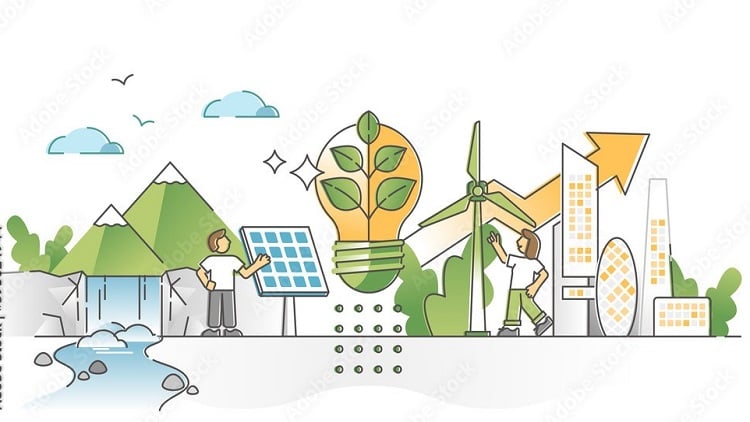 Positive energy districts produce more renewable energy than is consumed. Source: Adobe stock
The concept of "prosumer" has recently entered the realm of traditional power systems. A prosumer is a customer that, as a result of rapid technological advancements and attractive feed-in tariffs for renewable energy power generating stations, has constructed micro-generation systems to meet its energy needs and trade power to the market. The most often utilized renewable energy technologies are wind turbine, photovoltaic (PV), and biomass-based micro-combined heat and power systems. As a result of this trend, low voltage power networks become "active," with a reverse energy flow appearing at the point of delivery, which is often a medium voltage/low voltage substation, at various times of the day and year. This creates a slew of power quality issues for the end user and for distribution network stability. Such disadvantages can be mitigated more readily by grouping prosumers in an energy district.
What is an energy district?
An energy district is an energy production and consumption hub consisting of many electrically and thermally linked prosumers. The prosumers in an energy district are integrated with the grid via a unique point of delivery, allowing for aggregated energy exchange with the power system. The existence of a coalition coordinator is also critical in such a structure. The coalition coordinator's objective is to maximize the energy district utility while simultaneously lowering reverse energy flows at the point of delivery.
This is accomplished through implementation of an effective demand response program designed to enable consumers to avoid power consumption during a specified time period or to move consumption to another period in response to a pricing signal, an environmental condition, a financial incentive or a reliability signal. The demand response saves consumers money by reducing peak energy consumption, which is often associated with high-priced electricity, and therefore lowers the cost of wholesale power generation and consequently retail prices. Additionally, it may help avoid power outages by mitigating demand for additional energy generation and reducing producer market power.
What are positive energy districts?
Plans to create solutions to urban environmental problems have evolved over the last decade, with the smart city technology offering a potential means of minimizing greenhouse gas emissions. Smart cities are a collection of comprehensive and integrated cutting-edge urban development methods, frequently based on information and communication technologies (ICT) applications, which would assist in achieving urban sustainability and public welfare. Positive energy districts are gaining traction for expediting decarbonization of urban areas by producing more renewable energy than is consumed.
The core concept of a positive energy district is a region in a city that generates at minimum as much energy as it uses over the year. Positive energy district, on the other hand, is not an island, but instead a well-functioning and adaptable component of the broader power system. This notion redefines the current method of delivering energy in a single direction from a power plant to city residents through a pipeline. According to this concept, the city is a patchwork of consumers, producers and energy storage systems, all coexisting and interconnected. These energy districts are a challenge, but with the rapid advancement of energy technology in recent years, they are now within grasp.
How to plan for positive energy districts
Some fundamental conditions must be fulfilled in order for positive energy districts to be viable. Planners, should prioritize reducing local energy use as it makes little sense to invest in costly and resource-intensive power infrastructure to cover power usage that might easily be avoided. Emphasis should be placed on the immense potential for energy efficiency, and a large proportion of energy demand should be met via regional renewable energy generation. This can include reusing waste energy from electrical equipment and cooling systems, such as exhaust air energy, as well as producing solar energy locally and utilizing different forms of heat pumps. Planning a positive energy district is centered on the available resources, regional circumstances and prospects for reutilizing waste energy flows.
Thirdly, smart control and planning are required to ensure efficient power system operation. Loads should be balanced in such a way that energy production occurs near to consumption, both in time and space domains. Solar energy generation, for instance, can be harnessed for space refrigeration or cooling as demand generally peaks during periods of abundant sunshine. Likewise, smart control may be utilized to optimize output and consumption at peak periods. For instance, electric vehicles are often parked for extended periods of time throughout the workday or at night. This enables vehicle charging to be scheduled optimally based on grid balancing requirements. Numerous equipment and systems in buildings have a comparable amount of freedom in terms of when they may operate without creating any trouble.
Conclusion
An energy district is an energy production and consumption hub consisting of many electrically and thermally linked prosumers. The prosumers in an energy district are integrated with the grid via a unique point of delivery, allowing for aggregated energy exchange with the power system. Recently, the notion of a positive energy district has emerged as critical for smart cities' energy systems to transit to carbon neutrality. It may be described as an energy-efficient and adaptable urban region with net-zero greenhouse gas emissions and energy imports, with an annual renewable energy surplus on-site.




Your needs are subordinate to the greater good.