Study: Ship coating major source of ocean microplastic pollution
Marie Donlon | March 11, 2021Researchers from Germany’s University of Oldenburg are suggesting that the protective coatings applied to ship hulls are a significant source of microplastic pollution in the world’s oceans.
To make that determination, the Oldenburg team collected water samples from high-traffic shipping lanes in the North Sea. Stainless steel sieves were used to filter sub-millimeter-sized particles from the water samples and heated those particles to 1,112° F. This broke the particles down into chemically identifiable fragments, which enabled the research team to determine the number of different particles in the water as well as the different types of plastic present in the particle mass.
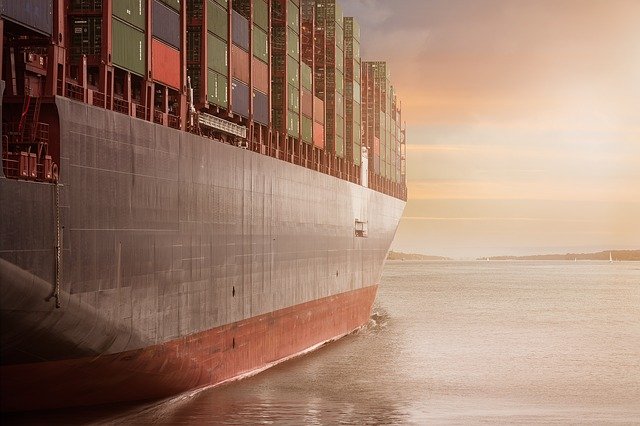
According to their findings, plastic for packaging — polyethylene and polypropylene — accounted for just one third of the particle mass. The remaining mass, however, consisted of polyvinyl chloride, acrylate polymers and polycarbonates — all of which are associated with ship coatings.
“We believe that these particles originate from ship coatings, where these plastics are used as binders in acrylic paints or epoxy resins, for example," explained Dr. Barbara Scholz-Boettcher, a lead author of the study. "Our hypothesis is that ships leave a kind of 'skid mark' in the water which is of similar significance as a source of microplastics as tire wear particles from cars are on land."
The research appears in the journal Environmental Science & Technology.