Study examines factors that impact deflection in construction beams
Amy J. Born | March 01, 2021Vibrations can cause cracks to appear in beams and also in surfaces such as concrete slabs. This is a particular issue in buildings that require high tensile strength and where machinery is likely to cause enough vibration to impact structural integrity.
Civil engineers use flexural beams to control this outcome. The deflection value, which can be calculated via multiple methods, is one metric used to determine a beam’s reliability. It should be low relative to the structure in which the beams are used. Deflection can be altered by reinforcing the construction materials with concrete or steel. Provisions for deflection values are included in ACI and other engineering codes.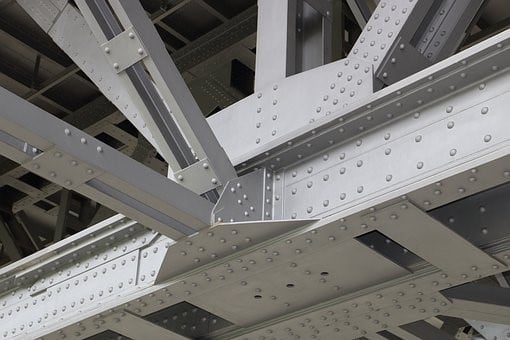 Source: Unsplash
A recent study by engineers from Erbil Polytechnic University, Iraq, on the effect of applied load intensity, steel reinforcement index amount as a ratio to the balancing reinforcement index, concrete strength and beam width on the depth-span ratio of a beam of different types (simply supported, fixed ended, propped and cantilever), is mostly theoretical, but can be used as a basis for practical projects in which beams are used.
The results outlined in a report published in The Open Civil Engineering Journal, demonstrate that the balancing reinforcement ratio had a small effect on the depth-span ratio. The required depth of the beam increased as the applied distributed load value increased and decreased with an increase in the concrete strength. This was found to be true for all beam types.
Based on their findings, the researchers recommend modification of the existing ACI codes to include other parameters, such as the applied distributed load, concrete compressive strength and cross section width, along with the balancing reinforcement ratio. Doing so would help engineers control the parameters within the defined ACI limits by accounting for the effect of the tension reinforcement area.