Repurposing e-waste as protective coating material
S. Himmelstein | August 04, 2020A barrier to the widespread repurposing of electronic waste (e-waste) is the presence of dissimilar materials: Glass, metals and other components are embedded in the waste, complicating the separation and recovery process. A microrecycling strategy devised at the University of New South Wales, Australia, can offer a solution for exploiting e-waste as a materials resource.
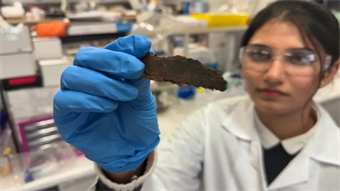
A powder produced by grinding glass and plastic from discarded computer monitors was heated to 2,732º F, yielding silicon carbide nanowires. These were subsequently mixed with ground-up circuit boards, placed on a 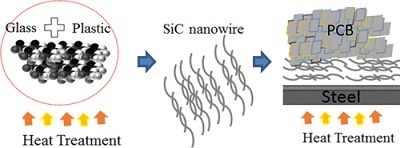 New surface coatings are derived from ground and thermally processed computer monitors, circuit boards and other electronic waste. Source: Rumana Hossain et al.steel substrate and heated to 1,832º F to melt the copper in the circuit board particles, forming an enriched copper-silicon carbide hybrid layer that bonded to the steel's surface as a protective coating.
Nanoindentation tests were conducted with a spherical indenter to assess the contact-damage resistance of the hybrid layer. Scanning electron microscopy and X-ray diffraction analyses showed no evidence of major cracks, holes or flaking. Visible microcracking in the surface and subsurface underneath the indents was not observed, and the addition of the hybrid layer was determined to increase the surface hardness by ∼125% compared to the base steel.
The technology described in ACS Omega could provide an opportunity to divert e-waste from landfills for conversion into value-added surface coatings.