The decade’s biggest additive manufacturing innovations
May 11, 2020This article is Part 1 of Welding Digest's two-part series of additive manufacturing innovations. Read Part 2 here.
Growth in the additive manufacturing industry has been explosive over the past decade. It features quick design to reality turnaround, ability to create previously impossible geometries and a variety of usable materials. It is therefore no surprise that additive manufacturing, sometimes referred to interchangeably with “3D printing,” has found itself as a mainstay component creation process at companies and even individual households for a wide spectrum of applications.
Additive manufacturing has rapidly advanced in the last decade. Here are six of the most important innovations and trends that we have seen over the last 10 years.
A movement from prototyping to production
When additive manufacturing first came on the scene, it was a truly novel idea. However, one important question needed to be answered: how could a process so slow and that produced parts with subpar mechanical properties ever be used for anything but concepts and three-dimensional visualizations?
Technology over the last decade has answered that question. With faster speeds and better design-for-additive methodologies, additive manufacturing is beginning to take market share from traditional subtractive manufacturing methods. Certain industries are beginning to adopt more and more AM as part of normal manufacturing process portfolios. Industries that require high quality, high flexibility, and lower volumes have been the first movers. Sectors such as aerospace, medical equipment and specialty consumer products have increasingly adopted additive manufacturing as an economical way to produce final, shippable parts.
Increased layer thickness
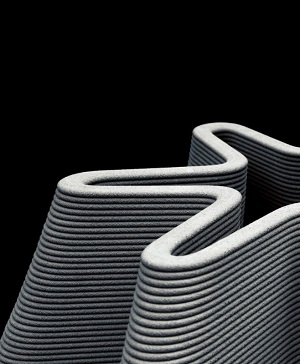 Figure 1: AM is capable of producing increasingly thick parts.Part of what is driving the move from prototype to production parts is the increased layer thickness that additive manufacturing machines have been able to achieve over these past few years. Applying thicker layers while maintaining high quality reduces the amount of cycles an additive manufacturing machine must go through to make a part for processes such as laser powder bed fusion, vat polymerization and directed energy deposition. This results in quicker build times. The thicker layers require more energy density, which has been another innovation in additive manufacturing over the course of the last decade. In addition to increased layer thicknesses, increased laser power has allowed for faster laser scans that further reduce overall build times.
Multiple scanning or deposition heads in a single additive machine
The widespread use of multiple scanning heads and deposition heads is another innovation over the past decade that have revolutionized additive manufacturing. These scanning heads are programmed to run together on a single part, collaborating with each other during the build to make sure they build their respective volumes. The use of a four-scanning head laser powder bed fusion machine can cut the time it takes to build the same part on a one-scanning head machine by nearly 75%. This increases the feasibility and the economics of building parts with additive manufacturing.