
Study: Video games improve cognitive development
Siobhan Treacy | April 15, 2020Researchers found that playing video games can improve a person’s cognitive development.
According to the study, expert video game players have greater sensitivity to contrasts, better hand to eye coordination and superior memory than beginners. The findings suggest that playing video games can cause long-term changes in the brain and allocate more cognitive power to individual visual stimuli.
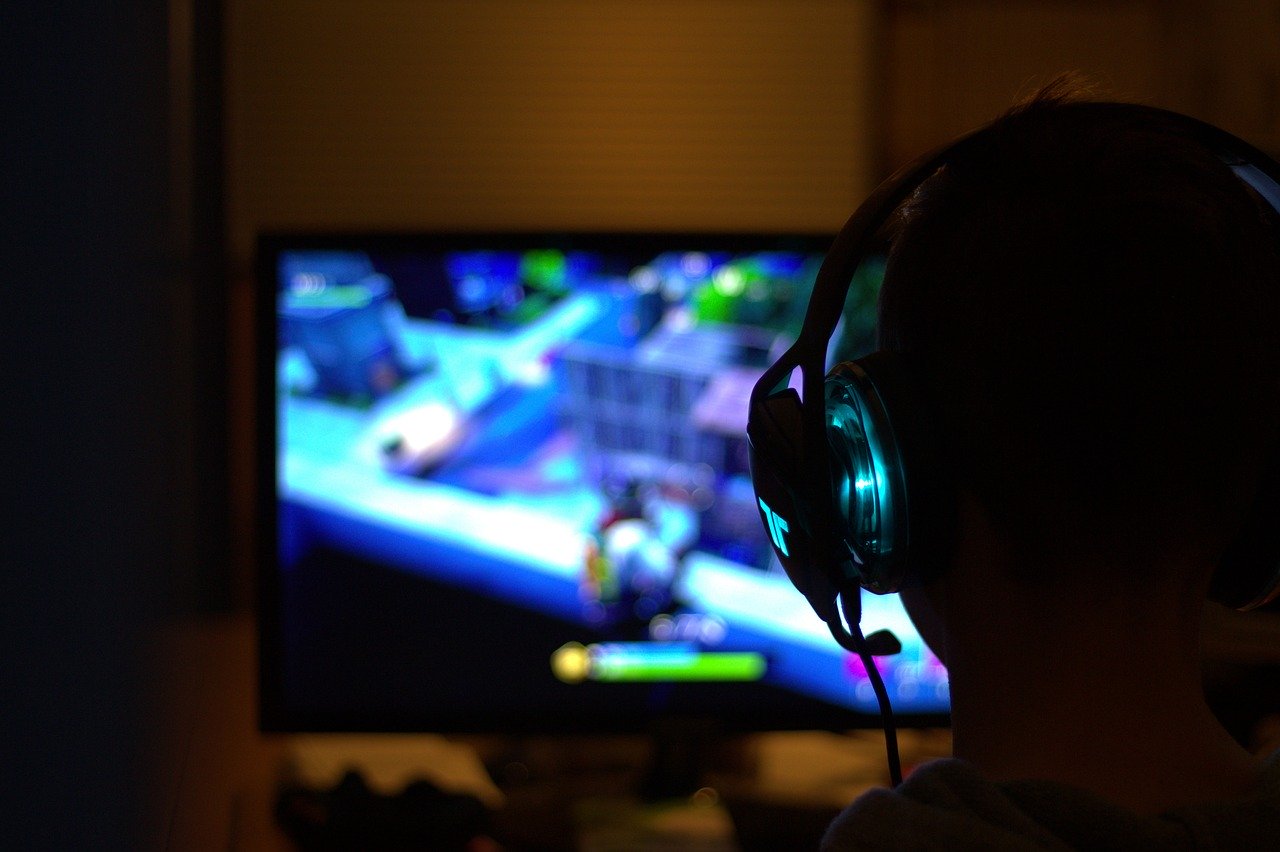
Before the study, the long-term effects of gaming on temporal visual selective attention had not been studied. The new study focuses on the brain’s capacity to distinguish between important and irrelevant information within a rapid stream of visual stimuli.
Attentional blink is the tendency of observers to blink, or fail to properly register, a visual stimulus if it appears quickly after a previous stimulus before the brain has had time to finish cognitively processing the first stimulus. A typical blink task involves showing participants a stream of digits and letters in quick succession. Participants were asked to press a button each time they saw a given target digit or letter.
Humans typically blink at a second target if it appears within 200 to 500 milliseconds of the first stimulus. EEGs suggest that blinking is due to the competition for cognitive resources between the two stimuli. Humans fail to register the second stimulus because the brain resources are currently being used to process the first stimulus.
For the study, the team gathered 38 healthy, young male volunteers from the University of Electronic Science and Technology. Half of the volunteers were expert players of League of Legends, a real-time strategy game. The experts had played the game for at least two years and were considered masters based on their rank among the top 7% of players. The other volunteers were beginners who had less than six months of playing experience and ranked at the bottom 30% to 45% of players. The volunteers participated in a blink task with 480 trials over two hours.
Participants wore EEG electrodes on the parietal region of the scalp. This allowed the research team to measure and localize brain activity through the experiment. The electrodes recorded Event-Related Potentials, tiny potentials that last zero to 800 milliseconds after a non-blinked stimulus. These potentials represent neural processes for registering and consolidating memory. The team focused on the P3b phase of ERP, the 200 to 500 milliseconds after a non-blinked stimulus because previous research has shown its timing and amplitude accurately reflects performance in a blink task. The later that P3b occurs, the less pronounced a stimulus is and more likely that it will be blinked.
The League of Legends expert players outperformed beginners during the study. Experts had stronger P3b and gave more attentional cognitive resources to each target. They are less prone to the blink effect, and accurately and quickly detected targets.
The long-term experience of action in real-time strategy games leads to improvements in temporal visual selective attention. Based on the results, the team believes that video games could be a tool for cognitive training.
This study was published in Frontiers in Human Neuroscience.




Fortunately,... there are study’s that study the long term effects of gamers...
Here’s a report from the study...
and what appears to be a gamers rebuttal...
Correlation is not causality. Even David Hume knew this in the early 18th century.
Two cohorts at different points in time is not temporality.
Teach your researchers about the minimal requirements for causality.
I am working with a group to develop new technology inclusive educational platforms adaptable to Montessori, Waldorf and other "whole child" methodologies that traditionally discount technology instruction. What is obvious is that Gaming (along with Virtual and Augmented Reality, ...) is a part of everyday life and we must establish a new set of "Best Practices" to include in our education models. I believe that too much gaming is probably not beneficial but neither is too much TV, gambling, drinking or the other habits that may be abused by those inclined to do so. Instruction to "Best Practices" at an early age may address some the issues of excessive behavior by establishing favorable habits that can benefit one for a lifetime.