Predictive maintenance model targets road and rail infrastructure
David Wagman | December 02, 2019A trio of partners has developed what they said is an evaluation strategy that roadway and railway engineers may use to prepare long-term infrastructure maintenance and management plans.
The technology was developed by Mitsubishi Electric, Tokyo Institute of Technology and Kagoshima University, and is being tested on bridges in the city of Satsumasendai in Japan. Applications in other parts of the country and for other types of infrastructure are also planned.
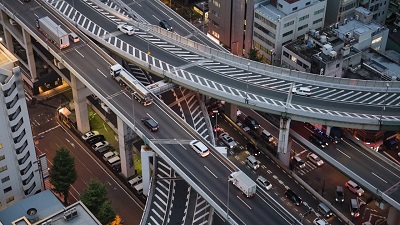 Extensive infrastructure built during Japan’s period of rapid economic growth is now deteriorated and in need of repair.The partners said that infrastructure built during Japan’s period of rapid economic growth is now deteriorated and in need of repair. In 2014, the Japanese Ministry of Land, Infrastructure, Transport and Tourism mandated that local governments and road companies conduct inspections of bridges and tunnels. The ministry is also promoting a move from post-repair maintenance to preventive maintenance involving more frequent repair work aimed at preventing serious problems.
The technology developed by the three partners includes three primary features.
First is a deterioration-rate model that focuses on the type of damage to predict infrastructure repair needs. Based on data and inspections of 538 bridges in Satsumasendai, a model is being refined to predict the rate of deterioration in concrete bridges, focusing on types of damage that have the greatest impact, such as cracks, concrete delamination and rebar exposure. The model identifies infrastructure degradation at an early stage and predicts when infrastructure will need repair.
Second, a prediction repair timing using a deterioration-rate model. Repair methods and costs differ according to the type and degree of damage, such as depth of cracks and extent of concrete flaking. The partners developed a deterioration-cost model to estimate costs according to the type and degree of damage. By combining the repair-cost and deterioration-rate models, the developers said it will be possible for engineers to estimate repair costs according to the estimated rate of deterioration. Rather than determining standard repair costs, the technology calculates costs at the time of repair based on the estimated rate of deterioration, allowing for the visualization of costs and repair work aimed at preventing serious damage.
Third, a system to weigh objectives, better enabling administrators to reflect priorities. By expressing a range of objectives as indicators, such as repair level or financial loss, and then evaluating those indicators against the repair-cost model, priorities can be optimized. Multiple maintenance plans may be developed and evaluated based on different maintenance objectives.