
“Did you get my email?” Communication tips for engineers
Jonathan Fuller | October 04, 2019In a comic strip featuring well-known cartoon engineer Dilbert, the eponymous character approaches a woman at a cocktail party and tells her that, as an engineer, he is highly marketable and could fix things around the house. “How are your social skills?” she asks, to which Dilbert replies “Wow – look who wants the moon.”
The antisocial engineer is a stereotype – while there are many introverted engineers who break into a cold sweat thinking about talking to even one person, there are many extroverted and gregarious ones as well. For both groups, effective communication is an important part of their everyday work. And for engineers, communication has areas of special importance.
Know your audience
Regardless of how many people a speaker is addressing, his or her worst nightmare is receiving that glassy-eyed stare that says, “You’ve just gone way over my head.” Engineering is a complex and technical discipline, and engineers often spend their entire careers refining their technical skills to master their work.
Engineering is also an interdisciplinary field. An engineer may find him or herself in a room with colleagues with expertise in areas as diverse as sales, marketing, IT or public health, but with little knowledge or interest in engineering projects. In cases like this — and in most professional communication situations — knowing the audience is key. Engineers describing projects and other technical work can set themselves up to be successfully heard by carefully considering how much knowledge or potential understanding their audience possesses, and then crafting an appropriate message. In other words, a message shared with a sales or marketing colleague would ideally be different from one delivered in a meeting with a fellow engineer or technical professional.
“Did you get my email?”
American writer William H. Whyte once stated, “The great enemy of communication, we find, is the illusion of it.” This fact was true when Whyte published it in 1950, and holds especially true today.
The modern knowledge worker is completely inundated with information. Email inboxes often contain thousands of messages, and it is all too easy to misplace an important message. Simply put, after sending an email to a colleague and not receiving a response, sending a follow-up after a few days is always a good idea to make sure the original message was received. Never assume a colleague has read your email unless they send a response.
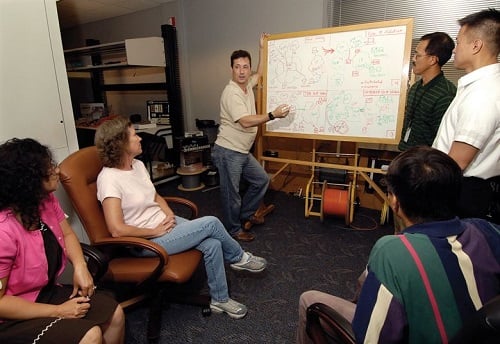 Figure 1: For engineers, communicating technical details about a project could mean its success or failure. Source: U.S. Air Force photo/Margo Wright
While catastrophic effects due to assumptions and unclear communication are rare, a study of major engineering disasters usually reveals a lack of communication between suppliers and other critical stakeholders. For example, investigators found the cause of the Kansas City Hyatt Regency walkway collapse of 1981, which killed 114 people and injured over 200, to be improper communication between structural engineers and steel fabricators. Initial engineering sketches were interpreted by the fabricator as finalized designs, and major design changes proposed by the fabricator were approved over the phone by a single person without any analysis or testing. These miscues and assumptions ultimately led to one of the deadliest structural collapses in U.S. history.
Engineering designs do not always mean the difference between safety and danger, but in cases where they do, engineers should strive to over-communicate rather than make assumptions that communication has taken place, as Whyte’s quote implies.
Soft skills training
Rather than simply assume they are inherently poor communicators, engineers can reframe their communication challenges as unworked muscles in need of training. Colleges, trade schools and organizations like Toastmasters International offer structured courses and events on “soft skills” like communication, listening, teamwork and adaptability.
These skills are especially important for engineering managers, who must not only understand and communicate about their own work but about their team’s as well. Considering the myriad results of poor communication, improving soft skills could mean the difference between success and failure for a project, team or company as a whole.




I have read a very similar quote that was attributed to Winston Churchill: "The single biggest problem in communication is the illusion that it has taken place."
E-mails are "non-communicated" for many reasons, here are just a few: