
Non-contact sensor indicates milk spoilage without opening container
Marie Donlon | May 07, 2019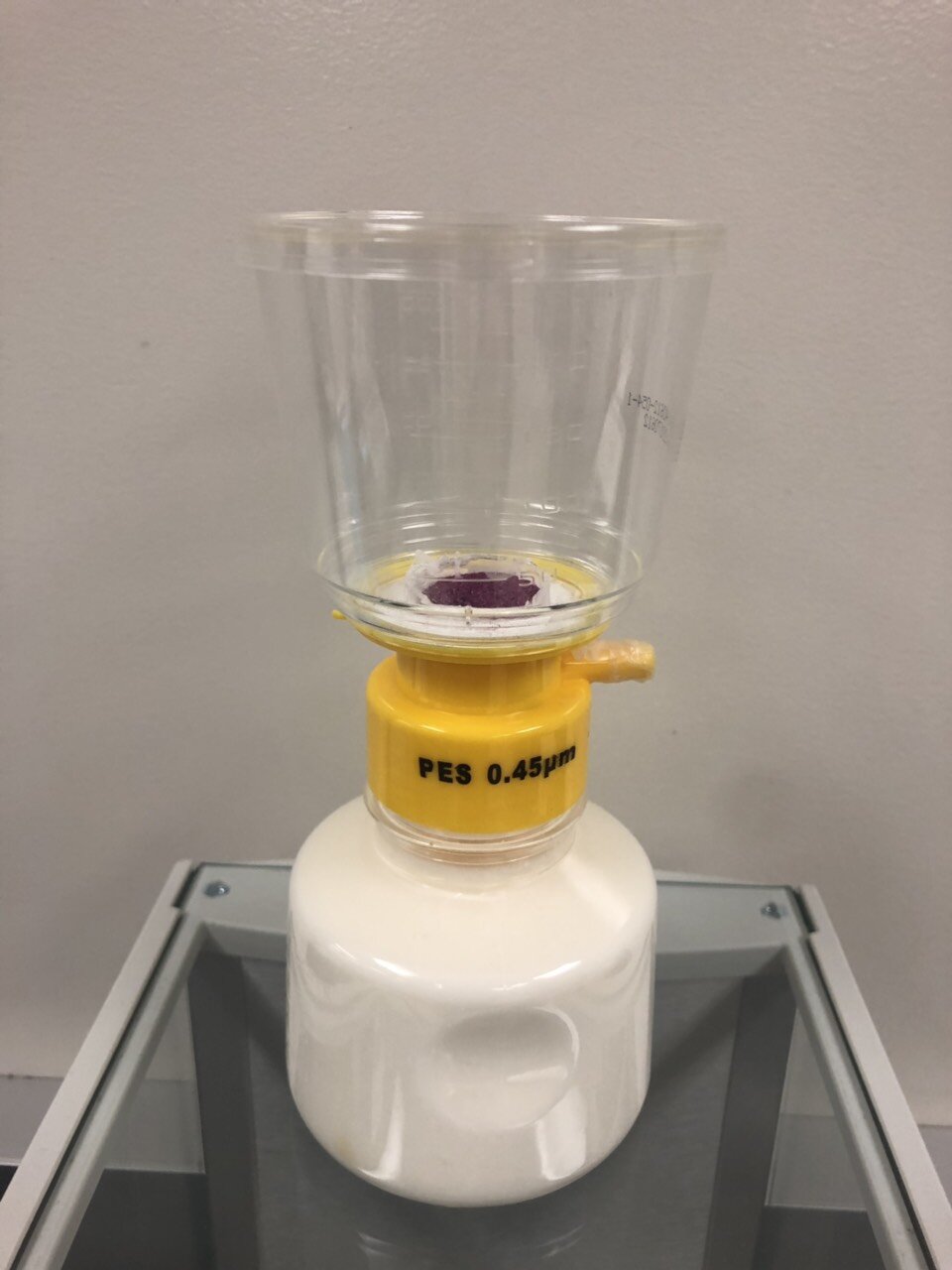 The experimental setup for detecting the volatile compounds in milk, with the pink nanoparticles seen above the liquid. Source: WSU
Washington State University (WSU) scientists have developed non-contact sensor technology that indicates milk expiration.
The sensor is composed of chemically coated nanoparticles that respond to the gas emitted by milk and bacterial growth that signals spoilage without contacting the milk. The sensor changes color, visually indicating expiration of the milk.
According to the researchers, when food spoils, bacterial growth on the food creates a volatile compound that smells bad. However, that is difficult to determine without opening the food packaging. The new WSU sensors overcomes that challenge and has been demonstrated in a lab setting.
The sensor was developed in collaboration with researchers from the WSU department of biological systems engineering (BSE), the school of food science and other departments.
Still in the early stages of development, this sensor only indicates if milk has spoiled. The team hopes eventually to devise a sensor that indicates how long until a product begins to spoil.
They imagine one day working with the food industry to incorporate sensors into the plastic caps of milk bottles tho inform consumers how long the milk will stay fresh. Expiry dates are currently calculated per best-case scenarios; for instance, the date is reliable if the food has been consistently stored at the appropriate temperature. However, food kept above refrigerator temperatures is a common occurrence and can happen during shipment or when the consumer is delayed on the way home from the store.
The research is published in the journal Food Control.
This should be a boon for the dairy industry.
The sensor could be tweaked to tell consumers exactly, down to the second, how much time they have
Consumers, constantly being reminded, will put milk buying on the top of their shopping lists.